
Compression Socks Not Helping Swelling? Here's Why, and What to Check Before You Give Up
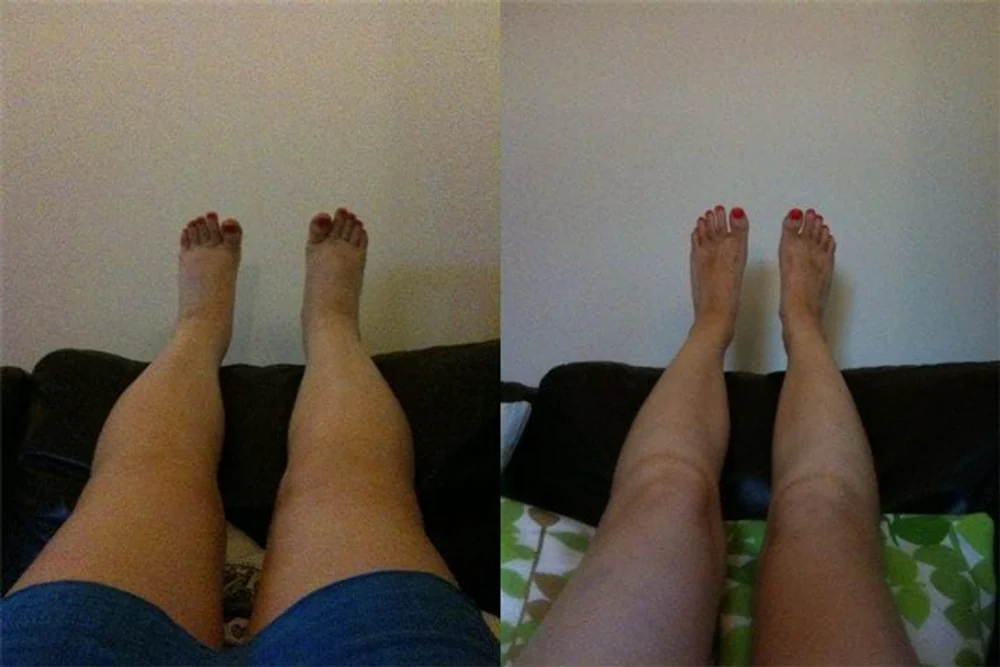
Quick answer. Four usual causes: the compression is too weak (under 15 mmHg does very little), the fit is wrong, you put them on after the swelling had already started, or the swelling isn’t the kind compression addresses. Check them in that order — and if it’s one leg, sudden or painful, stop checking and see a doctor.
You bought the socks. You wore the socks. Your ankles still thickened by four in the afternoon.
That’s a frustrating place to be, because compression genuinely is the best-evidenced thing in this whole area. When it doesn’t work, the cause is usually mundane — and usually fixable.
1. They’re not strong enough
This is the most common reason by a distance.
Compression is measured in mmHg, and the drugstore packs labelled “light support” often sit under 15 mmHg, which is closer to a snug sock than a medical garment. For genuine swelling most guidance points to the 15–20 mmHg range, with 20–30 for more stubborn cases and a doctor’s involvement.
If your box didn’t state a number, that’s your answer.
2. The fit is wrong
Compression works by being graduated — tightest at the ankle, easing as it goes up. That gradient is what pushes fluid upward.
Two things break it. Too loose and there’s no gradient at all. Too tight at the top — a band digging into your calf — and you’ve created a tourniquet above the fluid you’re trying to move, which can make the ankle worse.
Measure in the morning, before swelling starts. Sizing off an already-swollen leg gives you a sock that’s wrong for nineteen hours of the day.
3. You put them on too late
This one surprises people.
Compression is much better at preventing fluid from pooling than at pushing out fluid that’s already pooled. Put them on at 3 p.m. and you’re asking them to undo a day’s work.
Put them on before you get out of bed, or as close to it as you can manage. That’s the difference between prevention and rescue, and it’s often the whole reason someone concludes they don’t work.
4. It isn’t the kind of swelling compression addresses
Compression helps fluid that’s pooling because of gravity and poor return — the everyday, both-legs, worse-by-evening kind.
It does much less if the swelling is driven by something systemic. Heart, kidney, liver and thyroid conditions all cause fluid retention, and so do some common medications — calcium channel blockers, some anti-inflammatories, steroids and certain diabetes drugs. Primary-care guidance treats persistent bilateral swelling as something to evaluate rather than manage with socks.
And the pattern that means stop: one leg rather than both, sudden onset, or pain, warmth and redness. Compression is not the answer to that, and neither is waiting.
What to add when compression is doing its part
If you’ve fixed the strength, the fit and the timing and the evenings are better but not solved, the remaining gap is structural: compression only works while you’re wearing it.
The moment the socks come off, so does the effect. For a lot of people that’s most of the evening and all of the night.
That’s the space a daily drainage-directed supplement occupies — the part that keeps going when the socks are off. Vascular reviews of venoactive plant compounds land consistently on the same phrasing: help alongside the rest of your care. Not a replacement for the socks. The other half of the day.
Questions people ask
What compression strength do I actually need?
For genuine swelling, most guidance starts at 15–20 mmHg. The “light support” packs sold in pharmacies are often under 15, which does very little for fluid. Above 20–30 mmHg is territory where a doctor should be involved, particularly if you have circulation or nerve issues.
Should I wear them to bed?
Generally no, unless a doctor told you to. Lying flat removes the gravity problem that compression exists to counter, and overnight wear carries its own risks if the fit is wrong. The high-value window is from the moment you get up.
Why is my ankle worse where the sock ends?
That’s usually a fit problem — a band that’s too tight at the top acts like a tourniquet and traps fluid below it. It’s a sign to re-measure rather than to push through. Measure in the morning, before the swelling starts.
Can I use a supplement instead of compression?
We wouldn’t frame it that way. Compression has the strongest evidence in this area; a supplement is the part that continues when the socks come off. The reviews of venoactive compounds are consistent on this point — they describe help alongside standard care, not a substitute for it.