
How to Get Rid of Puffy Face in the Morning, and Why It Comes Back Tomorrow
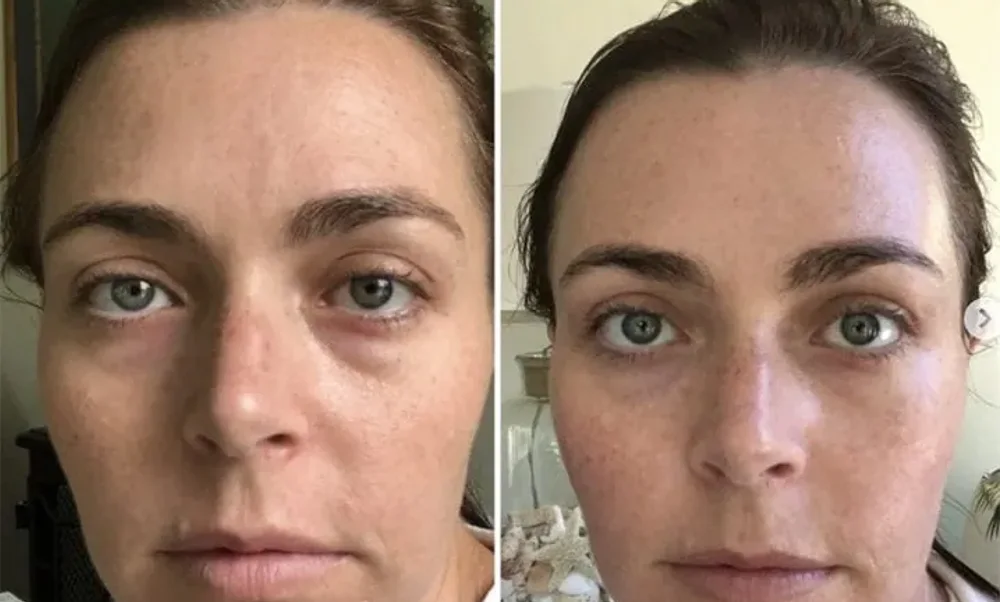
Quick answer. Cold water on the face, ten minutes upright, and gentle downward strokes from the jaw toward the neck will move most morning puffiness within about fifteen minutes. It comes back tomorrow because the cause is overnight — lying flat, plus salt and alcohol from the night before. Treating the morning treats the symptom.
You woke up four minutes ago and you already know it’s one of those days. The eyes are smaller than they should be. There’s a softness along the jaw that wasn’t there when you went to bed.
It’ll settle. It usually does, somewhere around ten o’clock. But you’ve quietly started building that hour into your morning — the meeting you don’t schedule before nine, the photo you don’t take.
Why your face and not your legs
Gravity spends all day pulling fluid down toward your ankles. Then you lie down for seven hours and it stops.
What happens next is simple: fluid that was pooling in your legs redistributes, and some of it settles in the loose tissue of your face — which has less structure holding it than almost anywhere else on your body. The area around the eyes is the thinnest skin you have, so it shows there first.
That’s the whole mechanism. Your face isn’t retaining more fluid than the rest of you. It’s just the place where a small amount is most visible.
The fifteen minutes that actually change what you see
None of this is exotic, and all of it works on the same principle — help the fluid move.
- Get upright and stay there. Gravity starts working for you again the moment you stand up. Ten minutes vertical does more than any product.
- Cold on the face. Cold constricts surface vessels. A splash works; a cold compress or a chilled spoon under the eyes works better.
- Stroke downward, not in circles. Light pressure from the middle of the face toward the jaw, then down the side of the neck. The direction matters more than the pressure — you’re following the drainage route, not massaging a muscle.
- Drink water. Counterintuitive, and true: mild dehydration makes the body hold on to fluid rather than release it.
What last night did to it
Morning puffiness is usually made the evening before.
Salt is the biggest lever. A salty dinner means your body holds extra water overnight, and the face is where you’ll see it. Alcohol does two things at once — it dehydrates you and disrupts sleep, and both worsen it. Poor sleep on its own does it too, which is why the puffiest mornings often follow the shortest nights.
Sleeping with your head slightly elevated — one extra pillow, or the head of the bed raised — takes some of the redistribution out of the equation before it starts.
When it’s a test rather than a routine
Everyday morning puffiness is symmetrical, mild, and gone within an hour or two.
See a doctor if it doesn’t settle by midday, if it’s on one side only, if it comes with shortness of breath, or if it arrives alongside swelling in your legs and ankles that also stays. Persistent facial swelling can point to thyroid, kidney or heart issues, and the primary-care literature treats that pattern as something to evaluate rather than manage at home.
That’s not a reason for alarm about the ordinary version. It’s the line between the two.
Why it’s back tomorrow
Because everything above treats the morning, not the cause.
Cold water and ten minutes upright move fluid that’s already there. They do nothing about the fact that tonight you’ll lie flat again for seven hours. If the morning face is a daily event rather than an occasional one, the thing worth changing sits further upstream: how well your body moves fluid in the first place, all day, so less of it is sitting there waiting to redistribute when you lie down.
That’s the gap a daily drainage-directed supplement is aimed at — and it’s the opposite approach to a water pill, which flushes fluid out through the kidneys and tends to leave you puffier when it wears off.
Questions people ask
How long should morning puffiness last?
For most people it settles within an hour or two of getting up, and it’s symmetrical — both sides of the face equally. If it’s still there at lunchtime, or only on one side, that’s worth a doctor’s look rather than another cold compress.
Do cold spoons and ice rollers really work?
Yes, for what they are. Cold constricts the small vessels near the surface, which visibly reduces puffiness for a few hours. It’s a genuine effect and a temporary one — you’re changing what’s already in the tissue, not changing how much arrives tomorrow.
Does drinking more water make it worse?
No — usually the reverse. When you’re mildly dehydrated the body holds on to fluid, and that shows up as puffiness. Steady hydration through the day tends to reduce morning swelling rather than add to it. Salt is the lever that works the other way.
Would a water pill fix it?
It would move fluid, and most people who try one dislike the trade. A diuretic tells the kidneys to flush, so you spend the day near a bathroom — and many people report waking up puffier afterwards, because the body compensates by holding on harder. Prescription diuretics have real uses, but “my face is puffy in the morning” isn’t usually one of them.