
Best Supplements for Menopause Water Retention (2026), and Who Each Route Actually Fits
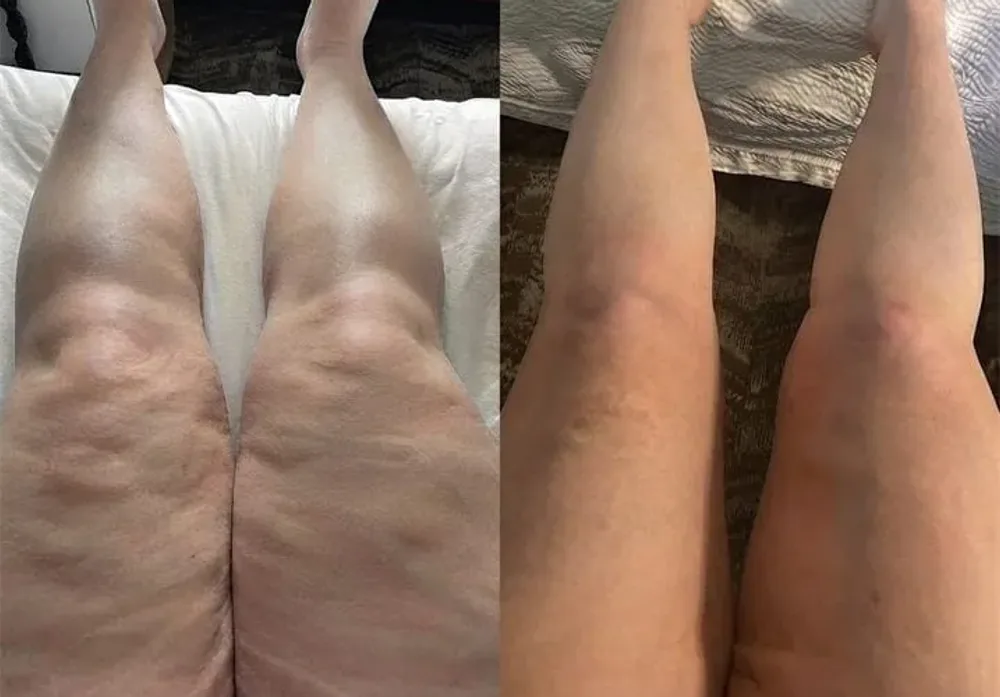
Quick answer. Fluctuating oestrogen changes how the body handles sodium, which is why bloating and puffiness arrive in perimenopause without anything else changing. Two routes have real support and they solve different halves: venoactive plant compounds for the swelling itself, magnesium for the sleep-and-cramps side. Compression and salt are still the biggest levers.
Nothing about your diet changed. Your rings are tighter, your ankles thicken by evening, and the bloating arrives on days that used to be unremarkable.
That’s common enough in perimenopause that it deserves a straight explanation rather than a supplement list — starting with why it began now, when nothing else about you did.
Why it starts now
Oestrogen influences how your kidneys handle sodium, and sodium determines how much water you hold. In perimenopause oestrogen doesn’t fall in a straight line — it swings, sometimes sharply, and fluid follows those swings.
Progesterone matters too. It has a mild natural diuretic effect, and as it declines you lose a little of the counterweight you had.
Add what usually arrives alongside — worse sleep, more stress, more sitting — and fluid balance is genuinely harder than it used to be. That’s context, and it’s also the reason the right answer is a daily one rather than a rescue.
The two routes, and which half each one solves
Venoactive plant compounds — for the swelling
This is the category with clinical attention for fluid, puffiness and heavy legs. A 2025 review in the Journal of Vascular Surgery: Venous and Lymphatic Disorders assessed it, and a 2026 critical appraisal in Vascular Pharmacology went back over the same evidence. Both found real effects, both concluding these compounds work alongside compression and movement rather than replacing them.
This is the route aimed at what you’re actually seeing in the mirror and in your shoes.
Magnesium — for the sleep and the cramps
Magnesium is the most studied thing here, and it’s worth being precise about the outcome: the strongest support is for sleep and muscle cramps, not for swelling directly. A 2025 placebo-controlled trial of magnesium bisglycinate in adults with poor sleep found a real, modest improvement; a 2021 meta-analysis of oral magnesium for insomnia landed in the same place.
If your perimenopause package includes broken nights and calf cramps alongside the puffiness, it earns its place — for those reasons.
What to be skeptical of
Water pills marketed for “hormonal bloating.” Flushing has no relationship to the hormonal cause, and the rebound is well described — a good afternoon followed by a worse morning.
Anything promising to “balance your hormones.” That’s a claim no supplement is in a position to make, and a reliable signal about the rest of the label.
One expectation worth setting
Red clover appears in both menopause formulas and drainage formulas, and those are two different products doing two different jobs.
In a menopause-symptom supplement, red clover is the star and it’s dosed to be one. In a drainage formula it’s one of four plants inside a 300 mg blend — nowhere near the doses studied for hot flushes. So a drainage product containing red clover shouldn’t be bought expecting it to do anything about hot flushes or night sweats. It’s there for the fluid side, which is what it’s doing here.
Knowing which product you’re buying is most of the decision in this category.
The unglamorous half
Compression still has the strongest evidence of anything on this page. Movement still pumps fluid mechanically in a way nothing swallowed does. Salt is still the biggest single lever on how much water you hold overnight.
A supplement is worth considering when those are already in place and the evenings still end the same way.
Our pick, and who should look elsewhere
The product we cover for the swelling side is Linfaflow — four whole-plant extracts in a dropper, no stimulant and no diuretic, aimed at the everyday puffiness that gets worse by evening. The face tends to change first, in the first week or two; legs and sock marks follow from around week three.
Look elsewhere if your dominant complaint is broken sleep and night cramps rather than swelling — magnesium is the better match for that half, and the two aren’t interchangeable.
When to get it looked at
Swelling that’s one-sided, sudden, or painful needs same-day attention regardless of what else is going on hormonally.
And persistent swelling in both legs that doesn’t settle overnight deserves an evaluation. Thyroid changes are common in this age range and cause fluid retention, as do several widely used medications. That’s a test, not a purchase.
Questions people ask
Why did bloating start in perimenopause when nothing else changed?
Because oestrogen affects how your kidneys handle sodium, and sodium determines water retention. In perimenopause oestrogen swings rather than declining smoothly, and fluid follows those swings. Falling progesterone removes a mild natural diuretic effect on top of that.
Will a drainage supplement help my hot flushes?
No, and it isn’t built to. Red clover is studied for hot flushes at doses far above what a four-plant drainage blend contains. If hot flushes are your main complaint, a menopause-specific formula is the right category — a drainage product is aimed at the fluid, not the thermostat.
Will magnesium help the swelling?
Probably not directly. Its evidence is strongest for sleep and muscle cramps, and those are worth having if they’re part of your picture. Buying magnesium expecting your ankles to change is likely to disappoint — the swelling side sits with the venoactive compounds and with compression.
Should I check with a doctor before taking anything?
Yes if you take hormone therapy, tamoxifen, or have a hormone-sensitive history — plant compounds with oestrogen-like activity are common across this whole category and belong in that conversation. Also worth asking if you take a blood thinner. And any swelling that’s one-sided, sudden or painful is a doctor first, regardless.