
Best Supplements for Swollen Legs and Ankles (2026): What Has Evidence, and What Each Route Is Good At
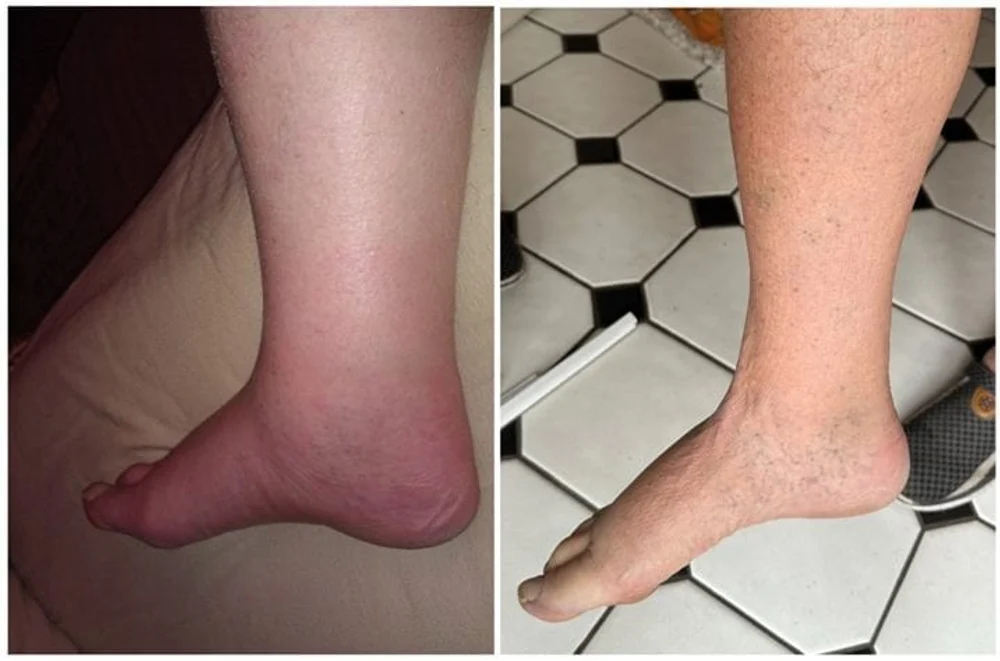
Quick answer. The route with the most clinical support is venoactive plant compounds — vein specialists have reviewed them twice in the last two years and both times concluded they do something real, used alongside the rest of your care. Compression and movement do more than any capsule. And one-leg, sudden or painful swelling is a doctor’s visit, not a supplement.
By six in the evening your ankles have thickened, your socks leave a ring that stays, and shoes that fit this morning don’t now.
You’ve probably already been told to move more and put your feet up, which is true and also not always possible when the job keeps you in a chair for eight hours.
So the honest version of this article is about what a supplement can and can’t add to that.
Start with what isn’t a supplement
Because it does more, and pretending otherwise would be dishonest.
Compression has the strongest evidence in this whole space. Moving your legs — even ankle circles at a desk — pumps fluid back up mechanically, which is exactly what sitting still prevents. Elevation above heart level for twenty minutes does more in that window than anything you can swallow.
A supplement is worth considering when you’re already doing those and the evenings still end the same way, or when the outside-in options only work while you’re doing them.
The routes that have something behind them
Venoactive plant compounds
This is the category with real clinical attention. A 2025 review in the Journal of Vascular Surgery: Venous and Lymphatic Disorders assessed venoactive compounds for swelling and heavy legs, and a 2026 critical appraisal in Vascular Pharmacology went back over the same evidence to check it held up.
Both reached the same conclusion, and it’s worth quoting the shape of it rather than overselling: these compounds do something measurable, and they work best as help alongside standard care, not as a replacement for it.
What sits in this category: horse chestnut, butcher’s broom, diosmin, and the traditional drainage herbs — cleavers, red clover, prickly ash.
Magnesium
Worth knowing about, and worth being precise: the evidence for magnesium is strongest for sleep and muscle cramps, not for swelling. If your evenings involve both heavy legs and night cramps, it may earn its place for the second reason.
What to be skeptical of
Over-the-counter “water pills.” Same mechanism as a prescription diuretic, no supervision, and aimed at a problem that flushing doesn’t really solve — most people who try them describe rebound swelling once they stop.
Anything promising a result in days. Fluid balance moves over weeks. A product claiming otherwise is telling you something about its marketing, not its formula.
What to look for on a label
- The form matters — whole-plant extracts and standardised compounds are not the same thing, and the research is usually on one of them
- Not a diuretic — check. Many “drainage” products are just caffeine and a herbal laxative
- A dose you can actually keep — the product that works is the one still in your routine in week six
- Third-party batch testing, which for a liquid herbal extract matters more than for a capsule
Our pick, and who should look elsewhere
The product we cover in this space is Linfaflow — four whole-plant extracts in a dropper, no stimulant and no diuretic, aimed at the everyday both-legs swelling that gets worse by evening.
Look elsewhere if: your problem is night cramps more than swelling (magnesium is the better fit), if you want a fast visible change before an event (nothing in this category does that), or if you’ve been prescribed a diuretic for a heart, kidney or liver condition — in that case the drug is doing a job no supplement replaces, and the conversation belongs with your doctor.
When it isn’t a supplement question at all
One leg rather than both. Sudden rather than gradual. With pain, warmth or redness. That combination needs same-day medical attention. Primary-care guidance treats that presentation as something to evaluate urgently, and it’s the one pattern where reading another article is the wrong use of your time.
Questions people ask
Do any supplements have real evidence for swollen legs?
Venoactive plant compounds are the category with genuine clinical review behind them — twice in the last two years, in vascular journals. The finding both times was that they do something real and work best alongside compression and movement rather than instead of them. That’s a more modest claim than most product pages make, and it’s the accurate one.
How long before I'd notice anything?
Weeks, not days. Most accounts describe changes to the face and general puffiness first, with legs and ankles following later — commonly from around week three. Anything promising a visible change in days isn’t describing how fluid balance works.
Should I just use compression instead?
Use compression as well. It has the strongest evidence of anything here. The gap it leaves is that it only works while you’re wearing it, and a fair number of people can’t wear it all day — that’s the space a daily supplement occupies, not a replacement for the socks.
When should I see a doctor about swollen ankles?
If it’s one leg only, came on suddenly, or brings pain, warmth or redness — same day. Also if both legs swell and it doesn’t improve with elevation overnight, or if it comes with breathlessness. Persistent swelling can signal heart, kidney or liver problems, and that’s a diagnosis rather than a purchase.