
Sonnus Gummies Review (2026): What Magnesium Bisglycinate and a 0.9 mg Melatonin Signal Do for the 3 a.m. Wake-Up
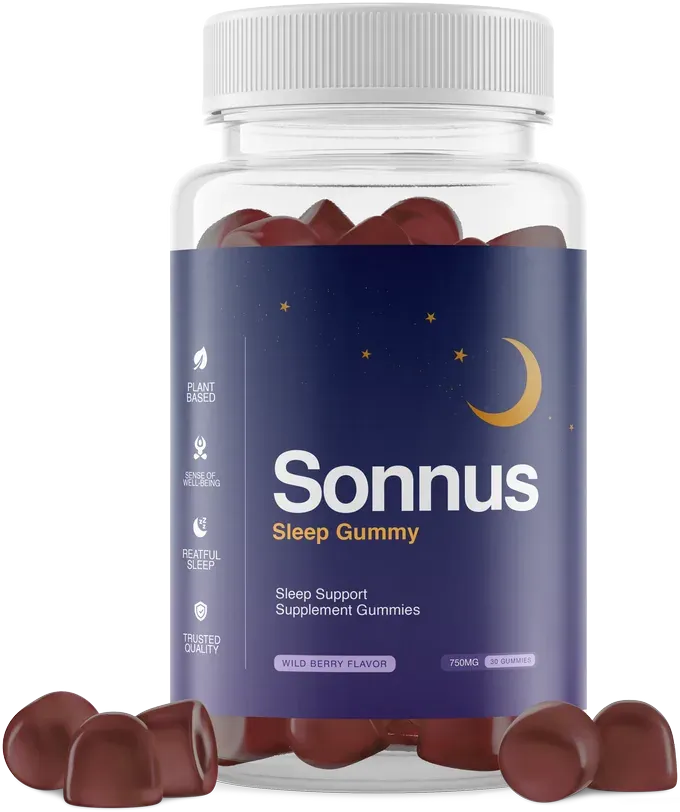
Quick answer. Sonnus is a wild-berry gummy built around magnesium bisglycinate, with L-theanine, GABA, apigenin, 5-HTP and lemon balm around it, plus a deliberately low 0.9 mg of melatonin. It targets staying asleep rather than falling asleep. Buyers mention the morning first — waking without the flattened feeling stronger sleep aids leave.
You fell asleep fine. That was never the problem.
The problem is that it’s 3:07 a.m. and you’re completely awake — not groggy, not drifting, awake — doing arithmetic about how many hours are left and knowing that the doing of the arithmetic is what will keep you up.
By four you’ve given up and picked up your phone. By seven the alarm goes off into a night that had two halves and only one of them counted.

Almost every sleep product on the shelf is built for the first half. Melatonin at 5 or 10 mg knocks the door down, and it works — for getting to sleep. It does very little about three in the morning, and the dose that big is a large part of why the next day feels flattened.
Sonnus is built for the second half, and the formula shows it. The melatonin here is 0.9 mg — roughly a tenth of a common shelf dose. It’s there as a signal that night has started, not as the thing doing the work.
At a glance
| Format | Wild-berry gummies — a 30-count bottle, no added sugar |
| How you take it | Two gummies about 30 minutes before bed |
| How long a bottle lasts | 15 nights, because it’s two a night — which is why the package matters more here than with a once-nightly capsule |
| What’s in it | Magnesium bisglycinate at the base, with L-theanine, GABA, apigenin, 5-HTP, lemon balm, B vitamins and 0.9 mg melatonin |
| Made | In the USA, in an FDA-registered facility, every batch third-party tested |
| Not in it | No added sugar, and no stimulant of any kind |
| Guarantee | 90 days, money back |
How does it work?
Three jobs, and the formula separates them rather than throwing one big sedative at all three.
The base — magnesium bisglycinate
This is the ingredient with the strongest evidence in the bottle, and it’s the foundation rather than a garnish. A 2025 randomised, double-blind, placebo-controlled trial in Nature and Science of Sleep followed 155 adults reporting poor sleep and found a significant improvement over placebo — modest rather than dramatic, and larger in people whose diets were low in magnesium to begin with.
That last detail matters more than it sounds. A 2021 meta-analysis in BMC Complementary Medicine and Therapies pooled oral magnesium for insomnia in older adults and reached a similar place: real, measurable, not miraculous.
The bisglycinate form is the one chosen for a reason — it’s the form used in that trial, and it’s gentler on the gut than the oxide form that turns up in cheaper products.
The mental noise — L-theanine, GABA, apigenin
The 3 a.m. problem is rarely about the body. It’s the mind switching on. These three are aimed at that: theanine and GABA for the wind-down, apigenin — the compound that gives chamomile its reputation — for the settling.
The night signal — 0.9 mg of melatonin
Here’s the deliberate part. A 2024 systematic review of randomised trials in the Journal of Pineal Research looked specifically at the timing and dose of melatonin, and the finding that matters for a product like this is that more is not better. Low doses taken at the right time work; large doses mostly add grogginess.
At 0.9 mg this is a tenth of what a typical shelf bottle gives you. It tells your body the night has started, then gets out of the way.
What to expect, and when
| Window | What people describe |
|---|---|
| Nights 1–3 | Mostly nothing dramatic, which is the point. The accounts that read as disappointed are almost all from this stretch |
| Week 1–2 | The morning is what people mention first — waking up clear rather than flattened |
| Week 3 onward | The 3 a.m. wake-ups get shorter or stop being an event. Fewer people describe lying there doing arithmetic |
Who it’s for — and who should skip it
It fits you if your problem is the second half of the night: you fall asleep fine, then surface at three and can’t get back. It also fits if you’ve used 5 or 10 mg melatonin and disliked the morning it produced — the low dose here is the direct answer to that complaint.
Skip it if you can’t fall asleep in the first place; that’s a different problem and this isn’t aimed at it. Skip it and talk to a doctor first if you take an antidepressant — 5-HTP acts on serotonin, and combining it with an SSRI, SNRI or MAOI is a genuine interaction, not a formality.
Safety
No stimulant, no added sugar, made in an FDA-registered facility with third-party batch testing.
The interaction worth taking seriously is 5-HTP with antidepressants. It raises serotonin, and stacking that with a medication doing the same thing is the one combination here that deserves a real conversation with your prescriber before you order.
Melatonin at 0.9 mg is low, but it’s still melatonin — if you drive at night or work shifts, know how you respond before relying on it.
If you’re pregnant or nursing, this isn’t for you.
What it costs
A bottle is 15 nights, so the package math matters more here than usual. The price on each package is per 30-day supply — the cost per night underneath is what compares them.
These are the full prices. We publish what the product costs at list, because seller promotions move and any percentage printed here would be wrong within weeks. The manufacturer’s page runs discounts that are usually well worth checking — each tied to a limited number of units — so look there for what’s live today.
Here’s the honest package logic. Thirty nights tells you about the mornings but barely reaches the stretch where the 3 a.m. wake-ups change. Sixty covers both. Ninety matches the guarantee, which is the point — the full window the seller stands behind, at the lowest cost per night.
You’re not locked in
All three carry the same 90-day money-back guarantee, all three ship free within the US, and none is a subscription — one-time purchase, nothing renewing.
Test window and refund window being the same ninety days is what makes the longer package the smaller risk. You’re not committing to ninety nights of product; you’re committing to ninety nights of deciding, with the money recoverable throughout.
One condition worth knowing: the guarantee lives with the authorized seller. A bottle from a marketplace listing may be the product, but it won’t carry the refund window.
Full detail on our Sonnus pricing page.
Questions people ask
Why is the melatonin dose so low?
Because the research says low works and high mostly adds grogginess. A 2024 systematic review of randomised trials in the Journal of Pineal Research looked specifically at timing and dose, and more melatonin did not mean better sleep. At 0.9 mg this is roughly a tenth of a common shelf bottle — enough to signal that night has started, not enough to flatten your morning.
Will it help me fall asleep?
Possibly, but that isn’t what it’s built for and we’d rather say so. This formula is aimed at the second half of the night — the 3 a.m. wake-up and the hours after it. If your problem is lying awake at bedtime unable to drop off, a product designed for sleep onset is a better match.
Will I wake up groggy?
The morning is the thing buyers mention first, and they mention it favourably — waking clear rather than flattened. That’s the practical consequence of a 0.9 mg melatonin dose instead of 5 or 10 mg. It’s also the reason people who switch from a stronger sleep aid tend to notice the difference in the day rather than the night.
Can I take it with an antidepressant?
Not without asking your prescriber first. Sonnus contains 5-HTP, which raises serotonin, and combining that with an SSRI, SNRI or MAOI is a real interaction. This is the one thing in the bottle that genuinely requires a conversation before you order — not a disclaimer, an actual risk.
What if it doesn't work for me?
There’s a 90-day money-back guarantee on every package, and it’s a one-time purchase with nothing renewing. Ninety nights is also roughly how long a fair test takes here, so the guarantee covers the whole trial rather than expiring first. Buy through the authorized seller; that’s where the refund window lives.
Should I talk to a doctor first?
Yes, if you take any antidepressant, if you’re pregnant or nursing, or if you drive at night or work shifts. Persistent insomnia also deserves a proper look — it can be a symptom of something a supplement won’t address.
Read next: what buyers report.
This review was developed based on these references:
- Schuster J, et al. “Magnesium Bisglycinate Supplementation in Healthy Adults Reporting Poor Sleep: A Randomized, Placebo-Controlled Trial.” Nature and Science of Sleep. 2025. pubmed.ncbi.nlm.nih.gov/40918053
- Cruz-Sanabria F, et al. “Optimizing the Time and Dose of Melatonin as a Sleep-Promoting Drug: A Systematic Review of Randomized Controlled Trials.” Journal of Pineal Research. August 2024. pubmed.ncbi.nlm.nih.gov/38888087
- Mah J, et al. “Oral magnesium supplementation for insomnia in older adults: a Systematic Review & Meta-Analysis.” BMC Complementary Medicine and Therapies. April 2021. pubmed.ncbi.nlm.nih.gov/33865376